Warm-up (5 min)
Quick revision from Lecture 11.
- Describe your morning routine with a reflexive verb: Eu me levanto às…
- Use a frequency word: Eu almoço no escritório todo dia. / Às vezes eu como em casa.
- Connect two actions: Primeiro eu tomo café, depois eu pego o metrô.
- In Lecture 11 you learned: Eu me levanto cedo, pego o metrô na Faria Lima e chego ao escritório às oito e meia. Marina disse: Você tem uma rotina bem paulistana! Today we focus on when — telling time and talking about meals.
Part 1 — Pedir e dar horas (Asking and telling time)
Time is essential for work, metro schedules, doctor appointments, and meeting friends for café or almoço.
Basic time questions and answers
| Portuguese | English |
|---|---|
| Que horas são? | What time is it? |
| Que horas é? | What time is it? (also common in Brazil) |
| Tem horas? | Do you have the time? (casual) |
| É uma hora. | It's one o'clock. |
| São duas horas. | It's two o'clock. |
| São três e meia. | It's three thirty. |
| São dez e quinze. | It's ten fifteen. |
| São oito e quarenta e cinco. | It's eight forty-five. |
| É meio-dia. | It's noon. |
| É meia-noite. | It's midnight. |
Grammar note: Use é with uma hora (one o’clock). Use são with all other hours: são duas, são cinco, são onze.
Minutes — two common styles
| Style | Example | English |
|---|---|---|
| e + minutes | três e vinte | three twenty |
| e meia | três e meia | three thirty |
| e quinze | três e quinze | three fifteen |
| menos + minutes | três menos dez | ten to three (less common in casual speech) |
São Paulo speech: Most people say e meia for half past and e quinze / e trinta / e quarenta e cinco for other minutes. São duas e meia is more natural than São duas e trinta in conversation.
A que horas?
| Portuguese | English |
|---|---|
| A que horas você acorda? | What time do you wake up? |
| A que horas é a reunião? | What time is the meeting? |
| A que horas a gente se encontra? | What time do we meet? |
| Às sete. / Às sete horas. | At seven. / At seven o'clock. |
| Às oito e meia. | At eight thirty. |
| Ao meio-dia. | At noon. |
Note: às = a + as (feminine plural — horas is implied). ao meio-dia = a + o meio-dia.
Clock reading — hours 1–12
| Time | Portuguese | 24-hour |
|---|---|---|
| 1:00 | É uma hora | São treze horas |
| 2:00 | São duas | São quatorze horas |
| 6:30 | São seis e meia | São dezoito e trinta |
| 7:15 | São sete e quinze | — |
| 12:00 | É meio-dia | — |
| 12:30 | É meio-dia e meia | — |
| 0:00 | É meia-noite | — |
24-hour clock: Official schedules (metro, flights, hospitals) often use horário de 24 horas. In daily: O voo sai às quinze horas (= 3 PM). Daily conversation usually stays with 1–12 + da manhã / da tarde / da noite.
Parts of the day
| Period | Time range (typical) | Example |
|---|---|---|
| da manhã | ~6h–12h | São nove da manhã. |
| da tarde | ~12h–18h | São três da tarde. |
| da noite | ~18h–24h | São oito da noite. |
| de madrugada | ~0h–6h | São duas de madrugada. |
| Portuguese | English |
|---|---|
| O almoço é ao meio-dia. | Lunch is at noon. |
| Eu janto às oito da noite. | I have dinner at eight at night. |
| A reunião é às três da tarde. | The meeting is at three in the afternoon. |
Part 2 — Refeições do dia (Meals of the day)
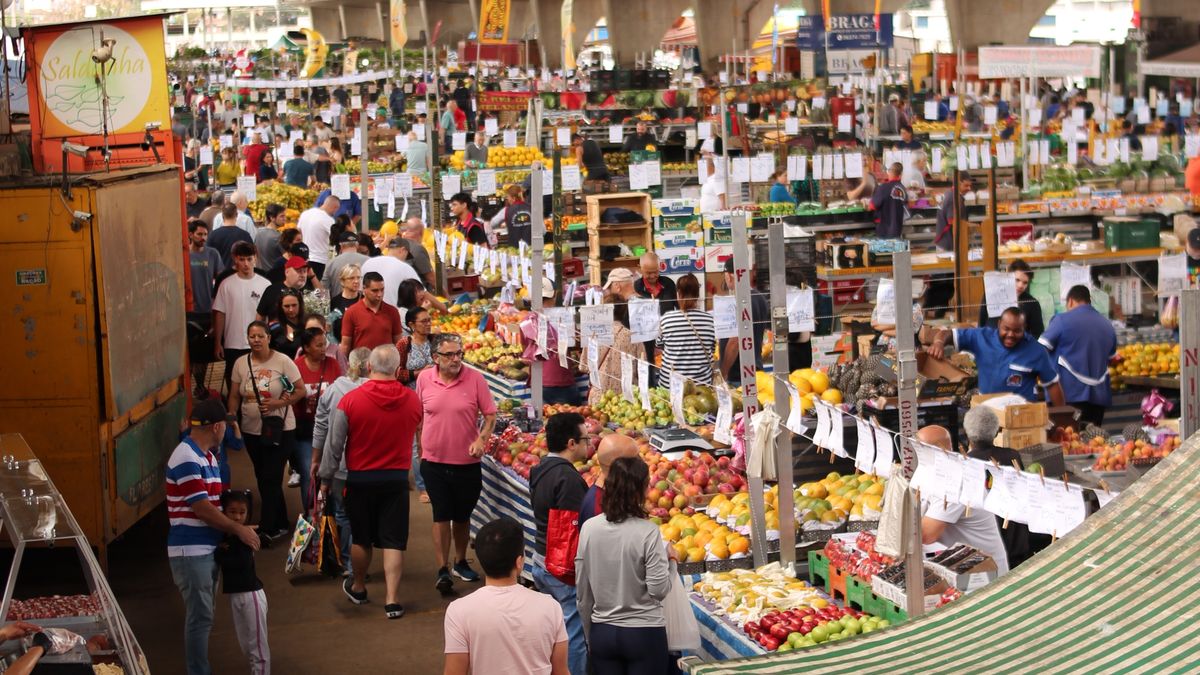
Brazilian meal culture is social, generous, and tied to the rhythm of the day. In São Paulo, meal times follow work schedules but also strong local habits.
Main meals of the day
| Portuguese | English | Typical time (SP) | Notes |
|---|---|---|---|
| café da manhã | breakfast | 6h–9h | Always café da manhã in Brazil — never pequeno-almoço |
| lanche da manhã | mid-morning snack | ~10h | Common at school/work |
| almoço | lunch | 12h–14h | Main meal for many Paulistanos |
| lanche / lanche da tarde | afternoon snack | 15h–17h | Coffee, pão de queijo, fruit |
| café da tarde | afternoon coffee/tea | 16h–17h | Social — invite friends |
| jantar | dinner | 19h–21h | Lighter or social, depending on the day |
| ceia | late supper | after 22h | New Year's, special occasions |
Important: Almoço is often the biggest meal — especially prato feito (PF) or marmita near the office. Jantar can be lighter on weekdays and more elaborate on weekends.
Verbs for eating and drinking
| Portuguese | English | Example |
|---|---|---|
| tomar (café) | to have (coffee) | Eu tomo café da manhã às sete. |
| comer | to eat | Eu como arroz e feijão no almoço. |
| almoçar | to have lunch | A gente almoça às uma. |
| jantar | to have dinner | Eu janto em casa às oito. |
| lanchar | to have a snack | Eu lancho às quatro. |
| beber | to drink | Eu bebo água o dia todo. |
| preparar | to prepare | Marina prepara o café da manhã. |
Sample daily meal schedule — Alex in Pinheiros
| Time | Meal | What |
|---|---|---|
| 7:00 | café da manhã | café, pão com manteiga, fruta |
| 13:00 | almoço | PF ou restaurante perto do escritório |
| 16:30 | lanche / café da tarde | café e pão de queijo |
| 20:00 | jantar | salada, sopa, ou delivery |
Part 3 — Hábitos alimentares (Eating habits)
Combine time, meals, and frequency adverbs from Lecture 11.
Frequency adverbs with meals
| Portuguese | English | Example |
|---|---|---|
| todo dia | every day | Eu tomo café todo dia às sete. |
| todos os dias | every day | Como em casa todos os dias. |
| às vezes | sometimes | Às vezes eu almoço no escritório. |
| raramente | rarely | Raramente eu pulo o café da manhã. |
| nunca | never | Eu nunca como fast food de manhã. |
| quase sempre | almost always | Quase sempre janto às oito. |
| de vez em quando | once in a while | De vez em quando a gente pede delivery. |
Connectors for routines
| Connector | Example |
|---|---|
| primeiro | Primeiro eu tomo café, depois eu saio de casa. |
| depois | Depois do almoço, eu volto pro escritório. |
| depois disso | Eu lancho às quatro; depois disso, eu trabalho mais um pouco. |
| logo | Logo depois do jantar, eu estudo português. |
| antes de | Antes do almoço, eu tomo água. |
| depois de | Depois de jantar, eu assisto série. |
Talking about what you eat
| Portuguese | English |
|---|---|
| O que você come no café da manhã? | What do you eat for breakfast? |
| Eu como pão, fruta e café. | I eat bread, fruit, and coffee. |
| Você almoça cedo ou tarde? | Do you lunch early or late? |
| Eu almoço tarde — às uma e meia. | I lunch late — at one thirty. |
| Você cozinha em casa? | Do you cook at home? |
| Eu cozinho às vezes, mas pedo delivery também. | I cook sometimes, but I order delivery too. |
Part 4 — Gramática: formas impessoais com se (Introductory)
At A1 level, you don’t need to master all uses of se. Learn these impersonal patterns — they describe general truths and habits, not a specific person.
Impersonal se patterns
| Portuguese | English |
|---|---|
| Se come bem, se sente melhor. | If you eat well, you feel better. |
| Se almoça tarde, fica com sono. | If you lunch late, you get sleepy. |
| Se toma café cedo, acorda melhor. | If you have coffee early, you wake up better. |
| Aqui se almoça bem e barato. | Here you eat well and cheaply. |
| Em São Paulo se janta tarde. | In São Paulo people dine late. |
Meaning: Se + verb can mean “if one/you…” or “people (in general)…”. No subject pronoun — the action is general.
Impersonal (se) vs personal
| Impersonal (se) | Personal |
|---|---|
| Se come fruta todo dia. | Eu como fruta todo dia. |
| Aqui se trabalha muito. | Eu trabalho muito aqui. |
| Se almoça perto do metrô. | A gente almoça perto do metrô. |
Part 5 — Vocabulário: alimentos básicos (Basic food vocabulary)
Café da manhã e lanche
| Portuguese | English |
|---|---|
| café | coffee |
| chá | tea |
| leite | milk |
| suco | juice |
| pão | bread |
| pão de queijo | cheese bread |
| manteiga | butter |
| queijo | cheese |
| presunto | ham |
| ovo | egg |
| fruta / frutas | fruit(s) |
| banana | banana |
| maçã | apple |
| mamão | papaya |
| iogurte | yogurt |
| bolo | cake |
| biscoito / bolacha | cookie / cracker |
Almoço e jantar — staples
| Portuguese | English |
|---|---|
| arroz | rice |
| feijão | beans |
| carne | meat |
| frango | chicken |
| peixe | fish |
| salada | salad |
| legumes | vegetables |
| batata | potato |
| macarrão | pasta |
| sopa | soup |
| farofa | toasted cassava flour (Brazilian side) |
| ovo frito | fried egg |
Drinks and extras
| Portuguese | English |
|---|---|
| água | water |
| água com gás | sparkling water |
| refrigerante / refri | soda |
| cerveja | beer |
| vinho | wine |
| açúcar | sugar |
| sal | salt |
| pimenta | pepper |
| azeite | olive oil |
Useful meal phrases
| Portuguese | English |
|---|---|
| Estou com fome. | I’m hungry. |
| Estou com sede. | I’m thirsty. |
| Estou sem fome. | I’m not hungry. |
| Que horas é o almoço? | What time is lunch? |
| Vamos almoçar juntos? | Shall we have lunch together? |
| Posso te convidar pro café? | Can I invite you for coffee? |
Part 6 — Marcações e compromissos (Appointments and scheduling)
Making plans with time
| Portuguese | English |
|---|---|
| A que horas a gente se encontra? | What time do we meet? |
| Vamos nos encontrar às três? | Shall we meet at three? |
| Pode ser às três e meia? | Can it be at three thirty? |
| Desculpa, não posso às três. E às quatro? | Sorry, I can't at three. How about four? |
| Tá bom / Fechado! | OK / Deal! |
| Atraso cinco minutos. | I'm five minutes late. |
| Já estou chegando. | I'm almost there. |
At work and with services
| Portuguese | English |
|---|---|
| A consulta é às dez. | The appointment is at ten. |
| O metrô passa a cada cinco minutos. | The metro comes every five minutes. |
| A reunião começa ao meio-dia. | The meeting starts at noon. |
| Que horas você sai do trabalho? | What time do you leave work? |
| Eu saio às seis. | I leave at six. |
Part 7 — Diálogos (Dialogues)
Dialogue 1 — Que horas são?
Com licença, que horas são?
Excuse me, what time is it?
São duas e quinze.
It's two fifteen.
Obrigado! Eu tenho uma reunião às duas e meia.
Thank you! I have a meeting at two thirty.
Então você tem quinze minutos. O prédio fica ali na esquina.
Then you have fifteen minutes. The building is on that corner.
Perfeito. E o metrô — passa com frequência aqui?
Perfect. And the metro — does it come often here?
Passa sim, a cada quatro ou cinco minutos nesse horário.
Yes, every four or five minutes at this time.
Ótimo. Obrigado de novo!
Great. Thanks again!
De nada. Boa reunião!
You're welcome. Good meeting!
Dialogue 2 — Marcando um almoço
Alex, a que horas você almoça hoje?
Alex, what time are you having lunch today?
Normalmente almoço à uma. Por quê?
I usually lunch at one. Why?
Quer almoçar comigo? Tem um restaurante bom perto da Paulista.
Want to have lunch with me? There's a good restaurant near Paulista.
Quero sim! A que horas a gente se encontra?
I'd love to! What time do we meet?
Que tal meio-dia e quarenta e cinco? Assim a gente não pega fila.
How about twelve forty-five? That way we avoid the line.
Fechado! Onde é?
Deal! Where is it?
Em frente à estação Trianon. Serve PF e salada. Barato e rápido.
Across from Trianon station. They serve PF and salad. Cheap and fast.
Perfeito. Meio-dia e quarenta e cinco, então. Até lá!
Perfect. Twelve forty-five, then. See you there!
Até! Não atrasa, hein?
See you! Don't be late, OK?
Prometo!
I promise!
Dialogue 3 — Hábitos alimentares
Alex, você toma café da manhã cedo?
Alex, do you have breakfast early?
Tomo sim — às sete. Primeiro café, depois pão com queijo.
Yes I do — at seven. Coffee first, then bread with cheese.
Eu sou diferente. Eu só tomo café e como fruta. Almoço é minha refeição principal.
I'm different. I only have coffee and eat fruit. Lunch is my main meal.
Eu também! Almoço às uma no escritório. Às vezes a gente pede marmita.
Me too! I lunch at one at the office. Sometimes we order lunch boxes.
E o jantar? Você cozinha?
And dinner? Do you cook?
Às vezes. Mas de vez em quando eu peço delivery — pizza ou comida japonesa. Janto às oito.
Sometimes. But once in a while I order delivery — pizza or Japanese food. I dine at eight.
Em São Paulo se janta tarde, né? Meus amigos convidam às nove às vezes!
In São Paulo people dine late, right? My friends sometimes invite at nine!
Verdade! Mas durante a semana eu prefiro jantar cedo. Fim de semana é diferente.
True! But during the week I prefer to dine early. Weekends are different.
Se come bem durante o dia, aguenta a rotina paulistana!
If you eat well during the day, you handle the São Paulo routine!
Com certeza. Boa noite e bom jantar!
For sure. Good night and enjoy dinner!
Part 8 — Exercício do relógio (Clock-reading exercise)
Write the time in Portuguese for each clock:
| # | Clock | Your answer |
|---|---|---|
| 1 | 🕐 1:00 | ___ |
| 2 | 🕑 2:30 | ___ |
| 3 | 🕒 3:15 | ___ |
| 4 | 🕕 6:45 | ___ |
| 5 | 🕛 12:00 | ___ |
| 6 | 🕗 8:20 | ___ |
| 7 | 🕘 9:00 (evening) | ___ |
| 8 | 🕙 10:30 (morning) | ___ |
Your turn: Partner says a time in English; you say it in Portuguese. Then switch.
1. Clock 1:00 — write in Portuguese.
É uma hora.
2. Clock 2:30 — write in Portuguese.
São duas e meia.
3. Clock 3:15 — write in Portuguese.
São três e quinze.
4. Clock 6:45 — write in Portuguese.
São seis e quarenta e cinco. / São sete menos quinze.
5. Clock 12:00 — write in Portuguese.
É meio-dia.
6. Clock 8:20 — write in Portuguese.
São oito e vinte.
7. Clock 9:00 (evening) — write in Portuguese.
São nove da noite.
8. Clock 10:30 (morning) — write in Portuguese.
São dez e meia da manhã.
Part 9 — Prática (Practice exercises)
1. Time: Complete: Que horas ___? → ___ duas e meia.
são, São
Que horas são? — use são with hours other than one.
2. É or são? ___ uma hora. / ___ cinco horas. / ___ meio-dia.
É, São, É
É with uma hora and meio-dia; são with other hours.
3. Meals: Match — (a) café da manhã (b) almoço (c) jantar (d) lanche — to typical times: 7h, 13h, 20h, 16h.
(a) 7h, (b) 13h, (c) 20h, (d) 16h
4. Frequency: Complete: Eu ___ (todo dia / nunca) pulo o café da manhã. Marina ___ (às vezes / sempre) cozinha em casa.
nunca; às vezes (or sempre, depending on meaning)
5. Connectors: Put in order: ___ eu tomo café, ___ eu pego o metrô, ___ eu chego ao escritório.
Primeiro, depois, logo (or depois for the last)
6. Translate: What time do you have lunch?
A que horas você almoça?
7. Translate: We meet at eight thirty in the evening.
A gente se encontra às oito e meia da noite.
8. Se or eu? ___ como bem e ___ me sinto melhor. (two personal forms)
Eu como bem e eu me sinto melhor.
Part 10 — Atividades orais (Speaking practice)
Activity 1 — Minha rotina alimentar (5 min)
Describe when you eat each meal:
- Eu tomo café da manhã às…
- Eu almoço às… / Eu almoço…
- Às vezes eu lancho…
- Eu janto às…
Activity 2 — Que horas é? (10 min)
Person A: Draw or say times (without showing the clock).
Person B: Ask Que horas são? and answer.
Use: É uma hora, São… e meia, … da manhã/tarde/noite
Activity 3 — Marcando um café (10 min)
Invite a partner for café da tarde or almoço:
- A que horas você pode?
- Vamos nos encontrar às…?
- Onde? Em frente ao metrô / no restaurante…
Negotiate until you agree: Fechado!
Activity 4 — Comparar hábitos (10 min)
Compare your eating habits with a partner:
- Eu almoço mais cedo/tarde do que você.
- Eu como em casa todo dia; você também?
- Eu nunca… / Eu às vezes…
Part 11 — Cultural note: refeições e horários em São Paulo
Almoço — the social anchor For office workers, almoço is sacred. Many leave the desk between 12h and 14h. PF (prato feito — rice, beans, protein, side) is the weekday classic. Self-service por quilo (pay by weight) is everywhere downtown.
Café da tarde Not just coffee — it’s a pause and a chance to talk. Vamos tomar um café? often means meeting a friend or colleague, with or without food. Padarias sell pão de queijo, coxinha, and suco all afternoon.
Jantar tarde Paulistanos often dine after 19h; 20h–21h is normal for restaurants. Weekday jantar may be light; sábado à noite is prime time for restaurants and bars.
Delivery culture Apps like iFood and Rappi are part of daily life. Pedir comida on a rainy night is completely normal — even in neighborhoods full of restaurants.
Marmita e meal prep Many workers bring marmita (lunch box) from home to save money. Fazer marmita is a common Sunday habit.
Useful SP meal vocabulary:
| Word | Meaning |
|---|---|
| PF / prato feito | set lunch plate |
| marmita | lunch box / takeaway box |
| rodízio | all-you-can-eat (often pizza or meat) |
| por quilo | pay by weight (buffet) |
| fila | line / queue |
| garçom / garçonete | waiter / waitress |
| conta | bill (at restaurant) |
Homework
Written
- Write your meal schedule for a weekday: time + what you eat for café da manhã, almoço, lanche, and jantar (8 sentences minimum).
- Clock practice: Write 10 different times in Portuguese (include meio-dia, meia-noite, and at least three with e meia).
- Connectors: Write a short paragraph (6 sentences) about your eating habits using primeiro, depois, às vezes, todo dia, and nunca.
- Translate to Portuguese: / What time is it? It's four thirty. / I have lunch at one every day. / Shall we meet for coffee at three? / If you eat well, you feel better. / Dinner is at eight in the evening.
Oral
- Record yourself (1–2 minutes) describing when you eat each meal and one food you eat often.
- Practice asking Que horas são? and answering with five different times.
- In real life: Invite someone (in Portuguese if possible): Vamos almoçar juntos? A que horas?
Optional challenge
Learn the opening hours of your nearest padaria and mercado. Write two sentences: A padaria abre às… / O mercado fecha às…
Summary cheat sheet
| Topic | Key forms |
|---|---|
| What time? | Que horas são? / A que horas? |
| One o’clock | É uma hora |
| Other hours | São duas, três e meia… |
| Noon / midnight | meio-dia / meia-noite |
| At (time) | às sete, às oito e meia, ao meio-dia |
| Meals | café da manhã, almoço, lanche, jantar, café da tarde |
| Frequency | todo dia, às vezes, nunca, raramente |
| Connectors | primeiro, depois, logo, depois disso |
| Impersonal se | Se come bem, se sente melhor |
| Scheduling | Vamos nos encontrar às…? / Fechado! |
Next lecture: No restaurante — ordering food, reading menus, and São Paulo eating-out culture.
Bom apetite e bons horários!